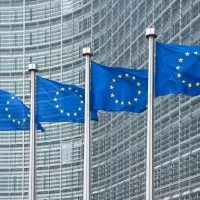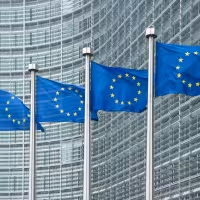
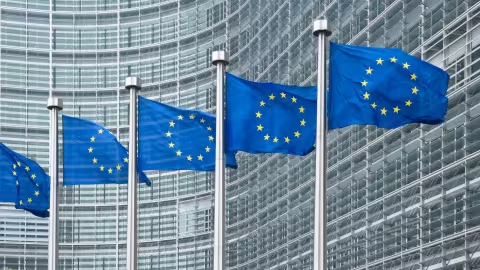
On 16 September, Ursula von der Leyen, President of the European Commission, delivered her State of the Union Speech for 2026, which sets out the priorities of the European Commission for the next year. On water resilience and agriculture, the speech focused mostly on water savings and drought management via adaptation.
Latest articles
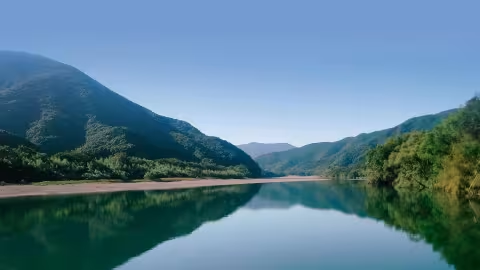
Today, the importance of wastewater treatment cannot be overstated when it comes to sustainable water management. With a growing population and expanding industrial activity, the volume of wastewater being generated is reaching alarming levels.
Proper wastewater treatment is essential to remove pollutants and contaminants, protect water sources, and encourage the reuse of treated water.
Le
Par Eatay Pomeranz, Technology Manager, Amiad
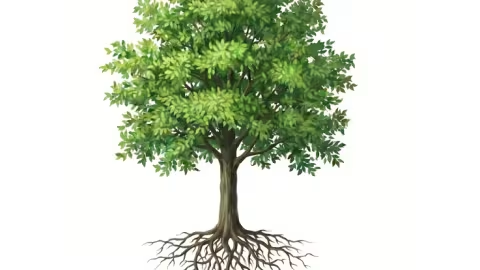
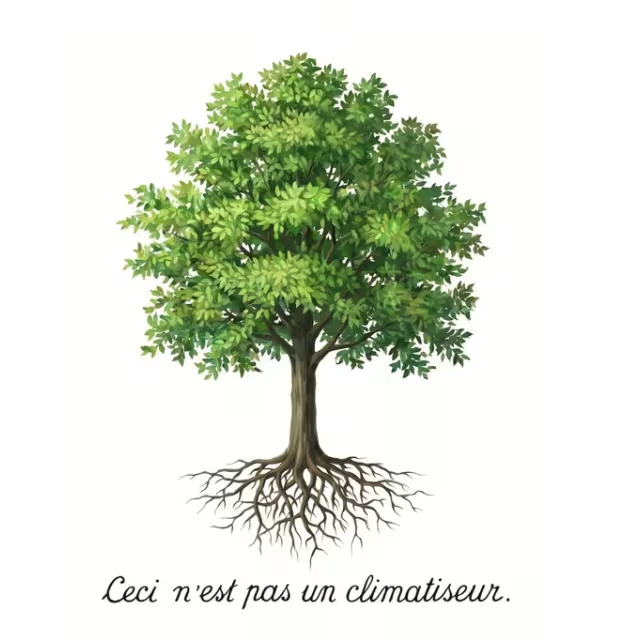
In the face of extreme heat, planting trees has become a standard practice in urban policy. But for Thomas Hanss, co-founder and technical director of Villes Vivantes, simply counting the number of trees planted isn’t enough. The real challenge lies in the trees’ living conditions: water, soil, choice of species, location, and the long term.
Le
Par Thomas Hans, Villes vivantes
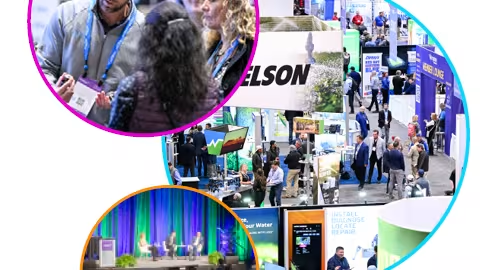
The Irrigation Show and Education Week is the irrigation industry’s ultimate resource for cutting-edge technology, best-in-class education and invaluable networking opportunities. If you’re ready to elevate your skills and supercharge your business, this is the event for you!
Le
Par Irrigation Association
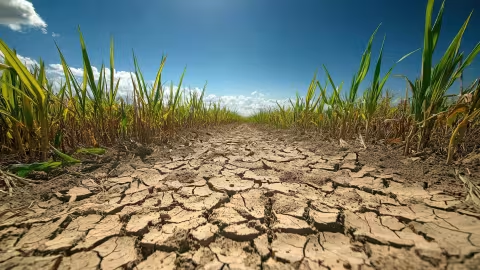
Enacted in August 2026, the Agricultural Emergency Act aims to strengthen France’s capacity to cope with droughts. Its section on water focuses in particular on expanding storage capacity, reusing wastewater, and streamlining procedures for certain water infrastructure projects. However, these provisions are causing serious concern among environmental groups.
Le
Par Irrigazette
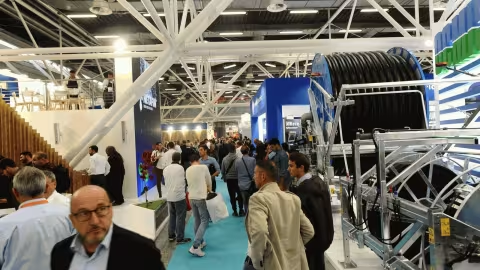
The European Irrigation Association (EIA) will celebrate its 30th anniversary at the next EIMA International, one of the world’s leading trade shows dedicated to agricultural machinery, technologies, and equipment. Organized by FederUnacoma, EIMA International—which will take place November 10–14, 2026, in Bologna, Italy—is also the only European trade show that brings together all European and global players in the irrigation industry.
Le
Par EIA