
The 26th Congress of the International Commission on Irrigation and Drainage (CIID) was held from October 12 to 17, 2026, in Marseille. Organized by the association Eau, Agriculture et Territoires (EAT), the French national committee of the CIID, it brought together approximately 1,000 participants to address a central question: how can food production be increased with water resources that are becoming scarcer, more variable, and more vulnerable?
The Marseille Appeal: A Common Framework
The high-level session (or “segment”) provided an opportunity to adopt the Marseille Appel, a non-binding political declaration resulting from a consultation with all WICD members (practitioners, decision-makers, researchers), to which 18 member countries contributed directly. It is based on five complementary, non-hierarchical priorities:
• Align agricultural systems with the realities of water, climate, and soil;
• Recognize agriculture as a steward of water resources;
• Plan and manage diversified agricultural systems;
• Mobilize sustainable, targeted, and accessible financing;
• Build capacity through research, data, and knowledge, while recognizing the role of women and youth.
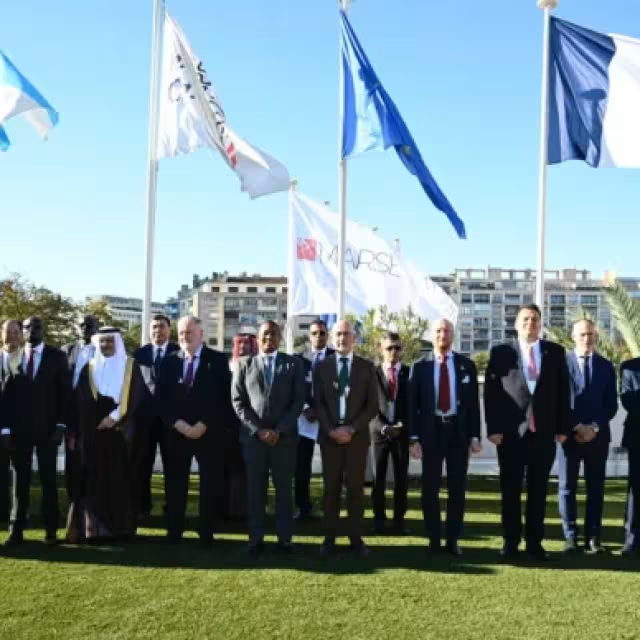
France, the host country, opened the high-level session dedicated to The Call, which recognized French excellence in these areas and welcomed the delegations alongside the association Eau, Agriculture et Territoires. During this session, 14 delegations gathered to endorse the Call and advocated for its implementation.
Key messages from the day
The first policy message is to emphasize that water and agriculture are inseparable: there can be no food security without water security, and agriculture is an integral part of the solution. The debate now centers on the implementation of the Marseille Appeal, with the key challenges identified as scaling up irrigation and drainage projects, knowledge dissemination, and financing.
Participants also reiterated that no single solution can be applied as-is: responses must be tailored to each region, hence the importance of sharing experiences among countries. Innovations—such as remote sensing, drones, and precision agriculture—must remain accessible to smallholder farmers and be supported by strong local governance.
The issue of financing was also frequently raised: farmers cannot bear the cost of adapting to climate change alone. The proposed approaches combine public and private financing, the role of public agricultural banks, payments for ecosystem services, and water pricing tailored to users’ ability to pay. Another challenge is ensuring that this funding reaches farmers. The discussions also highlighted the difficulties women farmers face in accessing land, energy, and water management bodies, as well as the need to engage younger generations.
Upcoming events:
The proceedings of the 26th Congress of the International Commission on Irrigation and Drainage will inform two international gatherings: the United Nations Water Conference in December in the United Arab Emirates, and the 11th World Water Forum in Saudi Arabia in March 2027.
The International Commission on Irrigation and Drainage (CIID, or ICID) is an international nongovernmental organization founded in 1950. It brings together practitioners, policymakers, and researchers from its member countries to address agricultural water management, irrigation, and drainage.
Read more : ICID 26 – ICID, International Commission on Irrigation and Drainage
