The European agricultural sector is entering a new and more complex era. What was once considered exceptional weather is now increasingly part of the seasonal pattern. Rising temperatures, irregular rainfall, and recurring droughts are reshaping how water must be managed across the continent.
Recent data confirm that a significant portion of European territory experiences water scarcity for at least part of the year, with the Mediterranean region, particularly countries such as Italy, Greece, and Spain, among the most exposed (European Environment Agency (EEA), data from 2024).
The summer seasons of recent years have demonstrated how vulnerable agriculture can be to these changes. Extended droughts and heatwaves have reduced soil moisture to critical levels across vast areas, putting both yields and farm profitability at risk. In this context, traditional irrigation approaches based on fixed schedules are no longer sufficient. The need for precision has become central: applying the right amount of water, at the right time, is no longer an optimization strategy but a necessity.
At the same time, agriculture is undergoing a rapid digital transformation. The adoption of advanced technologies, ranging from sensors and weather stations to satellite data and cloud-based platforms, is accelerating across Europe. However, these tools are most effective when they complement, rather than replace, the farmer’s expertise. Local knowledge remains irreplaceable: understanding the specific behavior of a soil, the microclimate of a field, or the historical performance of a crop is still fundamental.
Digital solutions therefore act as a powerful support system. By providing real-time data and actionable insights, they enable farmers to validate their decisions, respond more quickly to changing conditions, and manage resources more efficiently. The true value of technology lies not in the volume of data collected, but in its ability to simplify daily operations and improve decision-making.
As innovation expands, a new challenge has emerged: fragmentation. The market now offers a wide range of devices and platforms, often operating in isolation. Many farmers find themselves managing multiple systems that do not communicate with each other, creating inefficiencies and increasing complexity. This added complexity often falls directly on farmers, who are already facing the challenge of adapting to digital tools and, instead of simplifying their work, fragmentation risks making this technological transition even more difficult and time-consuming.
For this reason, interoperability has become a key requirement in modern irrigation systems. An effective solution must be open and flexible, capable of integrating different technologies into a single, coherent ecosystem.
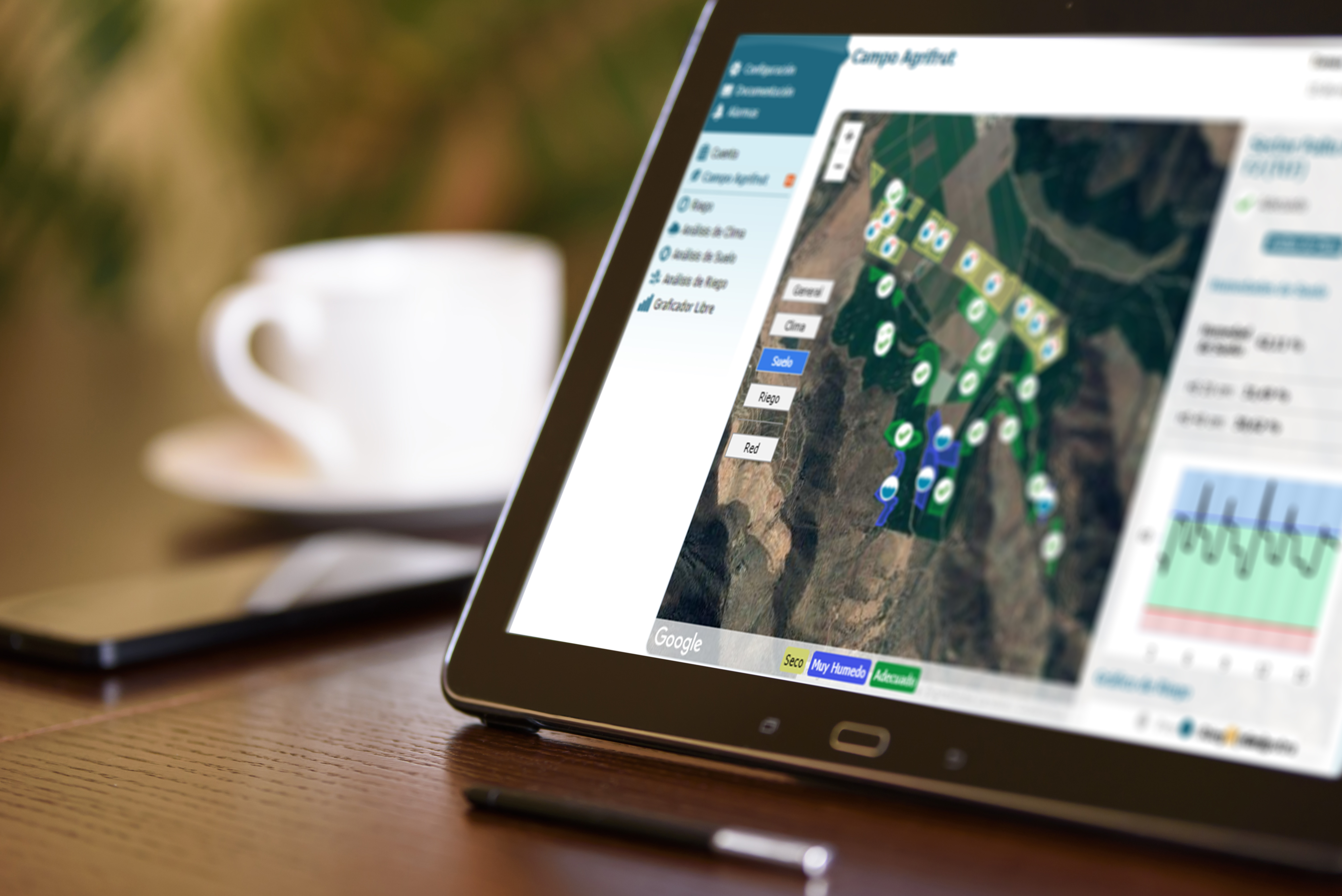
Photo credit - Wiseconn : "An effective solution must be open and flexible, capable of integrating different technologies into a single, coherent ecosystem".
This integration begins at the field level. Hardware systems, such as controllers and communication gateways, must be able to connect with a variety of sensors, regardless of manufacturer. Soil moisture probes, weather stations, and flow meters should work together within the same infrastructure, allowing farmers to build and adapt their systems over time without being locked into a single provider.
Equally important is integration at the software level. Data collected in the field must flow seamlessly into digital platforms, where it can be analyzed and transformed into practical recommendations. Through advanced interfaces and data exchange systems, information can move not only from the field to the dashboard, but also back to the irrigation system. This creates a closed-loop process in which monitoring and action are fully connected, reducing manual intervention and improving overall efficiency.
A further step forward involves adopting a more holistic approach to irrigation management. Traditionally, agronomic monitoring focused on crop needs, and hydraulic monitoring focused on system performance, have been treated separately. Today, bringing these two perspectives together is essential.
Agronomic data, such as soil moisture levels or evapotranspiration rates, indicate when and how much to irrigate. Hydraulic data, including pressure, flow, and energy consumption, reveal how effectively water is being delivered. When combined within a single control system, these insights allow farmers to detect inefficiencies, prevent water losses, and optimize energy use, ensuring that resources are used as effectively as possible.
This integrated vision naturally extends to fertigation. The combined management of water and nutrients is becoming a cornerstone of sustainable agriculture. By delivering fertilizers directly through irrigation systems and synchronizing their application with crop needs, farmers can improve nutrient efficiency while reducing environmental impact. This approach supports higher productivity and aligns with European sustainability goals, particularly those related to reducing nutrient losses and protecting water quality.
To fully benefit from these advancements, farmers and irrigation managers must make strategic choices. Investing in open and scalable systems ensures long-term flexibility, allowing new technologies to be integrated as they become available. At the same time, simplicity remains crucial: user-friendly interfaces and clear data visualization are essential to ensure that technology supports, rather than complicates, daily work.
Equally important is the human factor. The successful implementation of digital irrigation systems depends on skilled professionals, from installers to technicians, who are able to manage increasingly sophisticated infrastructures. The role of traditional irrigation specialists is evolving toward that of integrated water management experts, combining hydraulic knowledge with digital competencies.
Reliable local support is also a key element. Access to timely assistance and proper training ensures that systems remain operational during critical phases of the growing season, protecting both crops and investments.
Looking ahead, the future of European irrigation will be defined by connectivity, integration, and openness. By bridging the gap between different technologies and aligning agronomic and hydraulic perspectives, the sector can respond more effectively to the challenges posed by climate change.
The transition toward more advanced irrigation systems in Europe is not only a technological shift, but a necessary step to strengthen the resilience and long-term sustainability of the agricultural sector. Increasing pressure on natural resources, combined with rising energy costs already impacting many European countries, is making efficient water and energy management a priority for farmers. To be truly effective, this transition must be supported by adequate policies and infrastructure that facilitate the adoption of technology in the field and promote interoperability between systems. Furthermore, it requires a shift in perspective on how companies view competition: the integration of different innovative solutions should not be seen as a threat, but as an opportunity to foster a healthy market driven by the quality and value of hardware and software offerings.
Creating an enabling environment where innovation can be easily integrated into daily agricultural practices will be key to ensuring that European agriculture can successfully adapt to future challenges.
read more about Wiseconn :
Smart Irrigation Solutions for Businesses | Wiseconn