Creating a productive vegetable garden allows you to harvest healthy, abundant vegetables while respecting the soil, water, and biodiversity. By combining good gardening practices with the use of the right tools, you can achieve good yields without chemicals. This guide is for all gardeners who want to grow vegetables efficiently, sustainably, and enjoyably..
What Is a Productive Vegetable Garden?
A productive vegetable garden is one designed to produce vegetables in abundance over the long term, while preserving soil fertility, minimizing water use, and promoting natural balance—all without chemicals.
1. Choosing the Ideal Location for Your Productive Vegetable Garden
A well-exposed vegetable garden yields tastier vegetables and faster growth. To maximize the garden’s yield, the location must therefore meet several criteria:
• Sun exposure for 6 to 8 hours a day.
• Easy access to water for irrigation.
• Well-drained, living soil.
• A vegetable garden that is not exposed to strong winds.
Tools such as an online planner help you precisely delineate your growing areas and optimize the available space.
2. Preparing Living, Fertile Soil: The Key to a Long-Lasting Vegetable Garden
Soil health is the foundation of a productive vegetable garden. There’s no need to dig deeply into the soil—you simply need to aerate and loosen it to preserve the underground life of earthworms and microorganisms.
To naturally enrich the soil in your vegetable garden, you can:
• Add homemade compost or well-decomposed manure.
• Loosen and aerate the soil with a suitable tool: a garden fork or a cultivator.
• Feed the microorganisms with organic matter.
• Avoid excessive compaction to maintain well-drained soil.
Using ergonomic tools makes working the soil easier and reduces fatigue, especially over large areas.
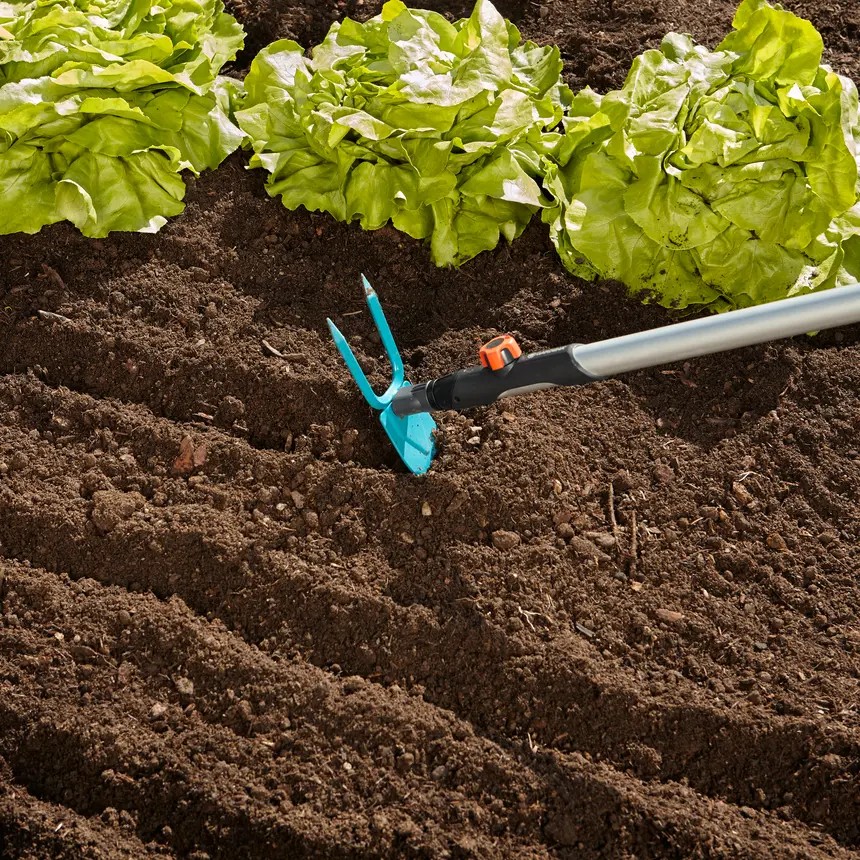
Photo credit Gardena : "Soil health is the foundation of a productive vegetable garden"
3. Mulch to protect and nourish the soil naturally
We can’t stress this enough: mulching (with fallen leaves, dry grass clippings, straw, or shredded branches) is one of the most effective techniques for a productive and natural vegetable garden:
• It reduces watering by up to 50% by retaining moisture.
• It suppresses weeds.
• It protects the soil from erosion and temperature fluctuations.
• It nourishes the soil as it decomposes.
Evenly distributed mulch is most effective when applied using tools that ensure a uniform layer around the plants.
4. Plan Your Crops Wisely
Planning your crops wisely helps optimize space, prevent diseases, and improve your garden’s productivity.
• Practice crop rotation: Avoid planting the same family of vegetables in the same spot year after year.
• Plant vegetables that complement each other. For example, carrots and lettuce, cabbage and spinach, zucchini and green beans, potatoes and butternut squash, tomatoes and radishes.
• Stagger your planting to grow a wider variety of vegetables and extend the harvest season.
Planting guides help you create straight rows and ensure you maintain the recommended spacing between plants. This promotes better growth for your vegetables.
5. Save Water Through Controlled Watering
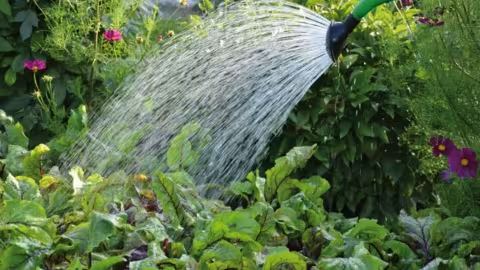
In the vegetable garden, you can produce just as much with less water. You can save water by using efficient watering practices and solutions.
• Water early in the morning.
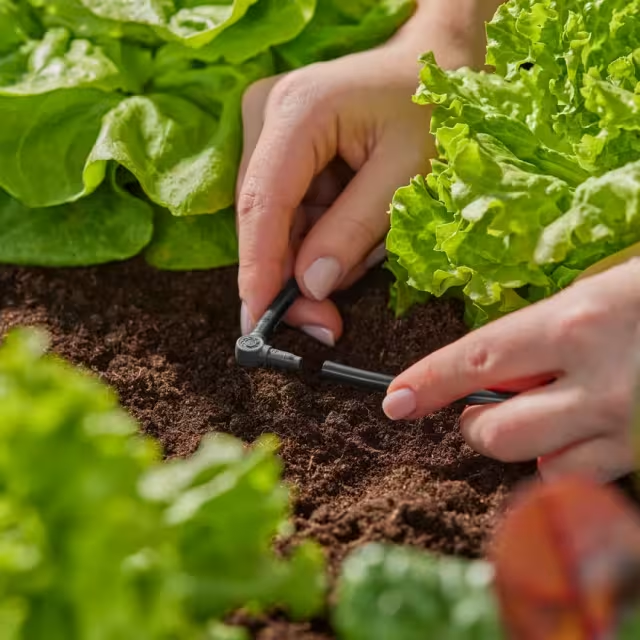
• Water at the base of the plants using drip irrigation.
• Install a rainwater harvesting system with a submersible pump.
• Keep the soil covered with mulch.
• Adjust the water flow to the crops’ needs.
An irrigation system tailored to the size of your vegetable garden allows you to distribute water precisely, evenly, and efficiently, while simplifying daily garden maintenance.
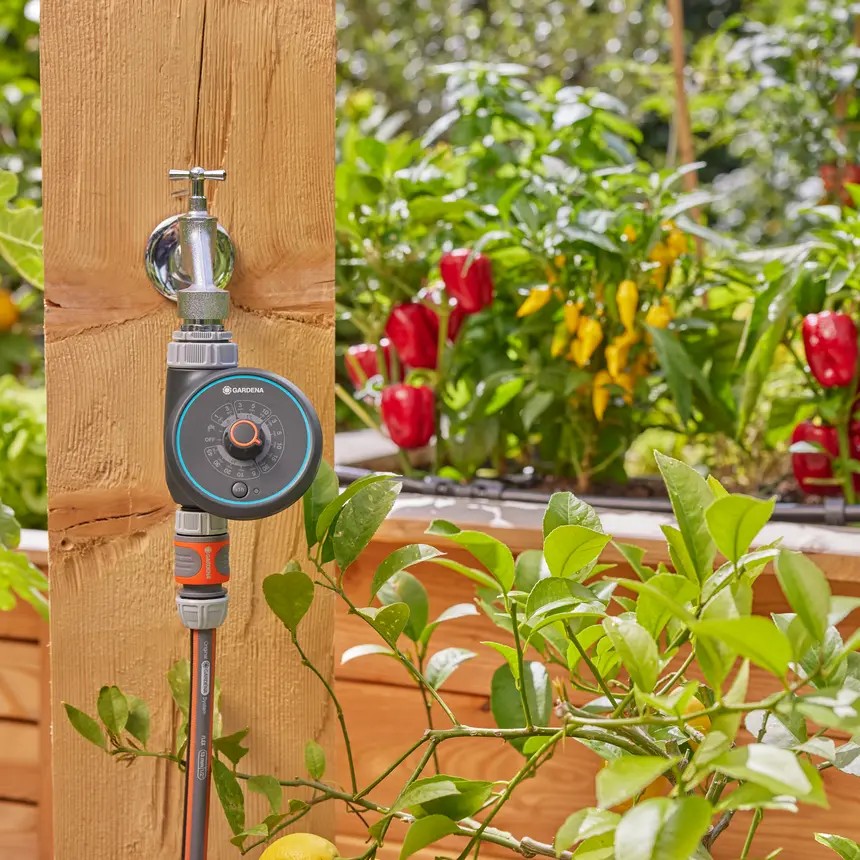
Photo - Gardena : "You can save water by using efficient watering practices and solutions"
6. Promote biodiversity for a healthy vegetable garden
A balanced and productive vegetable garden relies on nature to regulate itself. It yields better thanks to natural beneficial organisms. Ladybugs, bees, and birds naturally regulate the It yields better results thanks to natural predators. Ladybugs, bees, and birds naturally control pests and improve pollination.
• Plant nectar-rich flowers for bees: borage, white clover, and lavandin.
• Plant a tree with dense foliage for birds, which will disperse and replant the seeds.
• Use a compost bin to attract insects.
• Maintain natural, uncultivated areas.
• Avoid pesticides.
Gentle maintenance, using the right tools, helps preserve beneficial insects while keeping your vegetable garden healthy.
7. Maintain and Observe to Improve Your Harvests
A good gardener is a keen observer of their vegetable garden as it changes with the seasons. Observe your crops, adjust your practices, and maintain your garden regularly to improve your results year after year.
• Keep track of your successes and failures.
• Adapt your crops to your region’s climate.
• Try new, hardy vegetable varieties.
• Harvest and save seeds that are well-suited to your soil.
Creating a productive vegetable garden relies on a balance between natural practices and the smart use of gardening tools. By making work easier, optimizing watering, and respecting the soil, gardeners can cultivate sustainably while enjoying the process.
FAQ – Your Questions About Creating a Productive Vegetable Garden
-
Do the right tools improve vegetable garden productivity?
Yes, well-designed tools make maintaining your vegetable garden more precise and ensure a more abundant and consistent harvest. The right tools keep your soil fertile and alive, reduce your water usage, and make gardening more comfortable and efficient.
-
How can you naturally make a vegetable garden more productive?
By preserving soil quality, mulching around the bases of vegetable plants, and watering just the right amount. Equip yourself with ergonomic gardening tools designed for soil preparation, as they make daily garden maintenance easier.
-
What tools are useful for a productive vegetable garden?
Tools for soil preparation and planting—such as a digging fork, a hoe, and a planting trowel—are useful. You’ll also need a weeder for maintenance and a drip irrigation system equipped with a timer to manage water usage in the vegetable garden.
-
Is it possible to garden sustainably in a small space?
Yes, with good organization, controlled watering, and the right tools, it’s possible to maintain a sustainable vegetable garden for several years, even in small spaces.
read more : GARDENA | Innovative Garden Tools for Lawn Care, Watering &