As climate change and droughts become increasingly pressing realities, water management has become a critical issue for farms. Farmers face unprecedented challenges, including dwindling water resources and increasing irrigation needs. Yet much of the rainwater that falls on farms is lost through runoff or evaporation. Recovering this precious resource helps strengthen the self-sufficiency and resilience of agricultural systems.

Rainwater harvesting: an essential first step
The simplest and most common method for water harvesting is to collect rainwater from rooftops. By installing gutters connected to storage tanks, farmers can capitalize on rainfall. For example, a 100 m² roof receiving 800 mm of rain per year can provide up to 80,000 liters of water. These reserves can then be used for irrigation, watering livestock, or even for certain domestic uses, after appropriate treatment.
However, this collection method, while beneficial, is not always sufficient to meet the water needs of farms. The most resilient farms adopt more integrated and sustainable approaches to maximize water harvesting and use.
Landscape storage: a sustainable solution
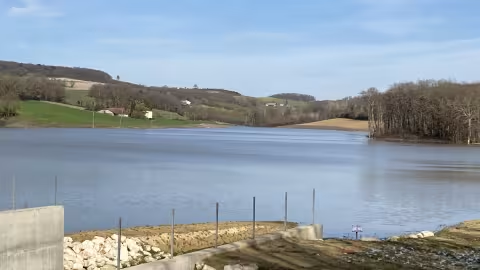
Beyond storage tanks, the most advanced farms are seeking to store water directly within the landscape. The creation of ponds, lakes, and retention basins helps slow runoff, conserve water for dry periods, while contributing to reduced erosion and the preservation of biodiversity. These water infrastructure features act like sponges, allowing water to slowly infiltrate the soil, thereby increasing groundwater recharge.
Regenerative hydrology: principles and practices
One of the key principles of regenerative hydrology is to slow down, distribute, and infiltrate water. When water flows too quickly, it washes away fertile soil elements, thereby reducing soil quality and groundwater recharge. Water that infiltrates gradually remains available longer for crops.
Among the techniques used to achieve these goals, swales play a prominent role. These ditches, dug along contour lines, capture runoff and promote its infiltration into the soil. Downstream trees and crops then benefit from improved water availability, which enhances their productivity and resilience to drought.
Another innovative method is Keyline Design, developed by the Australian P. A. Yeomans. This approach relies on a detailed analysis of the terrain to redirect water to the driest areas of the land. By improving soil moisture while reducing the risk of erosion, this technique proves to be a valuable tool for farmers seeking to optimize water use.
Water-Conserving Practices: An Essential Asset
Effective water management also relies on water-conserving practices. Drip irrigation is a particularly effective method for minimizing water loss through evaporation. This system delivers water directly to plant roots, thereby reducing waste. Furthermore, mulching is another technique that helps retain soil moisture and reduce watering needs. By covering the soil with organic materials, such as wood chips or leaves, farmers can also limit weed growth, which improves water use efficiency.
Agroforestry complements this water management strategy. By integrating trees into cropping systems, farmers create shade, which helps maintain soil moisture and promotes a more humid microclimate. Tree roots also aid in water infiltration, thereby increasing crop resilience during droughts.
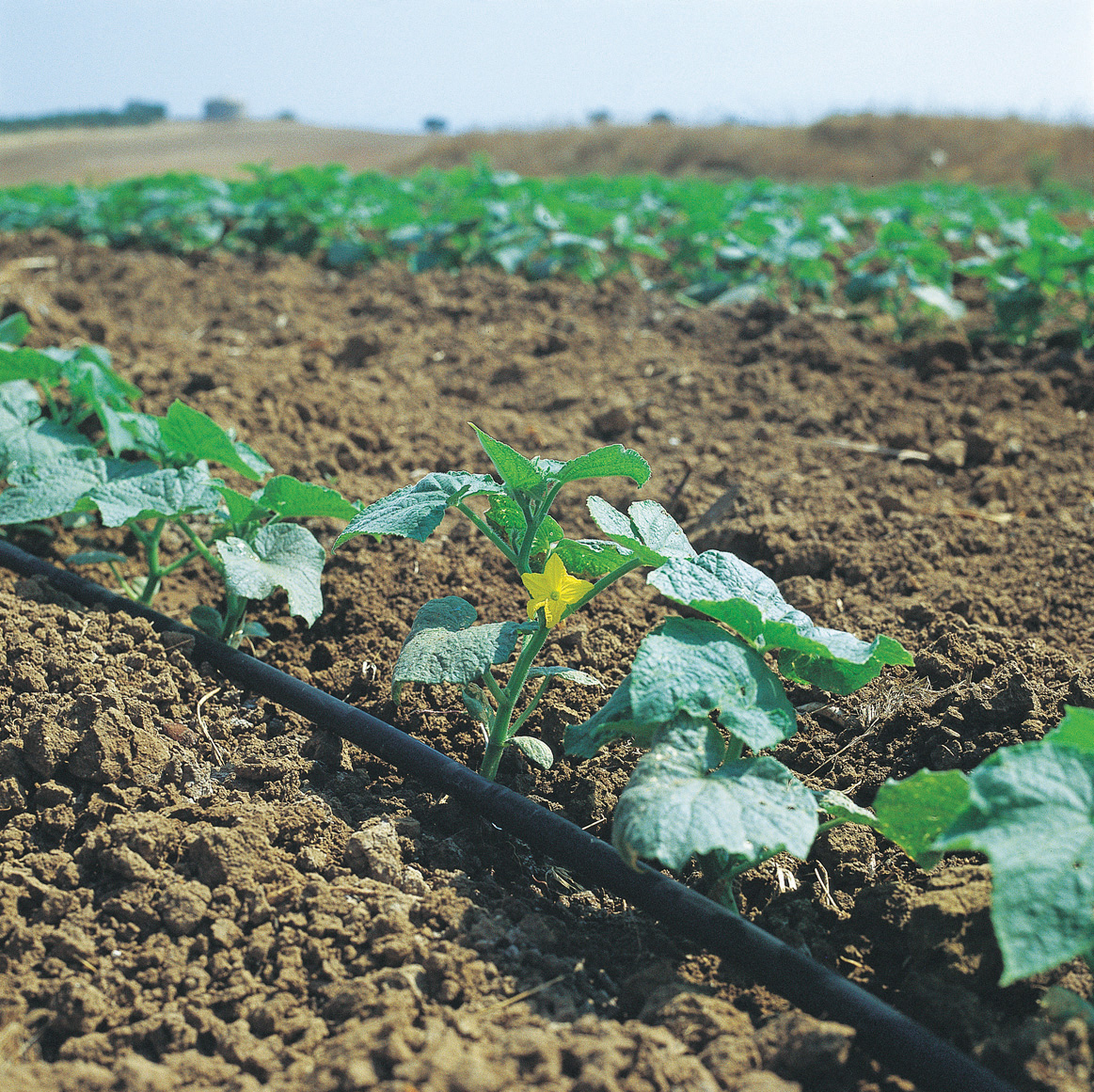
Photo : Netafim - "Drip irrigation is a particularly effective method for minimizing water loss through evaporation. This system delivers water directly to plant roots, thereby reducing waste"
A Holistic Approach to the Future of Agriculture
Rainwater harvesting and integrated water resource management are therefore not merely storage techniques. They constitute a holistic and systemic approach that enables farms to better cope with climate variability while preserving natural resources. Agricultural systems that adopt these methods are not only more resilient to droughts, but they also contribute to the health of surrounding ecosystems.
Every drop of water conserved today represents a precious reserve for tomorrow. By integrating water harvesting and management practices, farmers can not only improve their self-sufficiency but also play a key role in combating climate change and the degradation of natural resources.
Conclusion
Faced with an uncertain future marked by rapid climate change, it is imperative that farms adopt innovative and sustainable water management practices. Rainwater harvesting, landscape storage, regenerative hydrology techniques, and water-efficient practices are all tools available to farmers to ensure the resilience of their operations. By investing in these approaches, they can not only protect their production but also contribute to a more sustainable and environmentally friendly agricultural future. The transition to water-resilient farms is essential to ensuring food security and preserving resources for future generations.