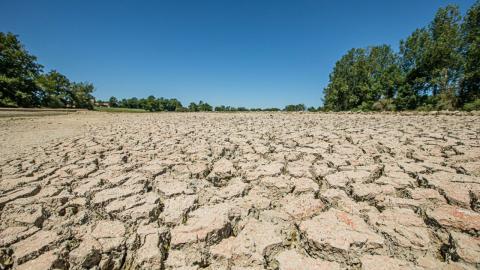
Paris, April 2026 - Launched in March 2023, France’s national Water Plan now reaches a critical milestone. Designed as a structural response to growing water scarcity, it rests on three pillars: reducing consumption, improving supply, and protecting water quality. Three years on, all measures have been initiated and 77% have already been implemented. Yet behind this progress lies a persistent challenge: climate change is intensifying pressure on water resources, forcing faster and deeper transformations.
Progress Underway, but Targets Remain Uncertain
At the core of the Water Plan is a flagship goal: reduce water withdrawals by 10% by 2030 compared to 2018–2020 levels. Early results appear promising. Between the reference period and 2023, overall withdrawals declined significantly, especially in industry (-19.5%), energy (-11.4%), and agricultural irrigation (-11.2%). Drinking water use fell more modestly (-2.7%).
However, these figures must be interpreted cautiously. They reflect an exceptional context marked by historic droughts. The years 2020, 2022, and 2023 rank among the driest ever recorded in France, leading to widespread restrictions that mechanically reduced water use. The path toward the 10% reduction target therefore remains achievable—but far from guaranteed.
Increased Funding Signals Stronger Commitment
Since 2023, nearly €1.39 billion has been mobilized by water agencies to support the plan’s measures. Starting in 2026, an additional €435 million per year will be allocated.
This financial effort reflects a scaling-up of public action. It supports local governments, businesses, and farmers in upgrading infrastructure, improving efficiency, and developing alternative water sources.
Cutting Losses and Expanding Alternative Sources
The plan’s second pillar focuses on improving water availability. A key priority is reducing leakage in distribution networks. Of the 170 local authorities initially identified as critical weak points, 109 have already improved their systems to reach at least 50% efficiency.
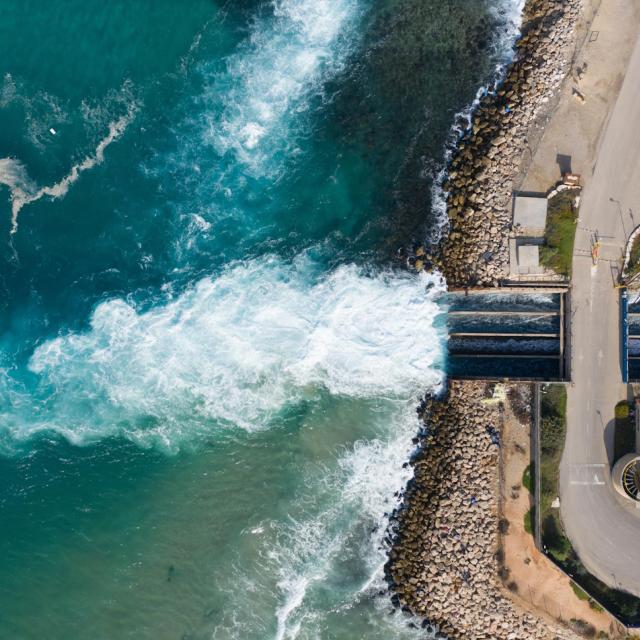
Another strategic lever is the development of non-conventional water sources, particularly the reuse of treated wastewater. With more than 500 installations recorded by early 2026, France is moving toward its target of 1,000 projects by 2027.
This acceleration was made possible by major regulatory reforms that removed longstanding barriers. Today, reclaimed water can be used in agriculture, industry, urban cleaning, and certain non-potable domestic uses.
Still, this solution is not universal. Its viability depends heavily on local economic and technical conditions. Infrastructure costs remain a limiting factor in some regions.
Agriculture: Between Adaptation and Growing Pressure
Agriculture sits at the center of the water challenge. Both highly dependent on water and highly vulnerable to climate variability, the sector must balance food production with reduced consumption.
Rather than imposing strict cuts, the Water Plan aims to stabilize irrigation volumes at the national level while encouraging more efficient water use per hectare.
Support mechanisms have been deployed, including an agricultural water infrastructure fund that has financed 145 projects worth €40 million. These initiatives focus on modernizing irrigation systems, improving efficiency, and developing storage capacity.
Water storage remains a sensitive issue. The government is attempting to move beyond polarized debates by promoting a framework based on consultation, technical rigor, and alignment with broader transitions in agricultural practices.
Meanwhile, water quality remains a pressing concern. Around 100 drinking water sources are abandoned each year due to contamination, often linked to agricultural pollution.
Businesses Turn Water Efficiency into a Competitive Advantage
Economic actors have also stepped up their efforts. Industrial water withdrawals have dropped by 46% between 1994 and 2023.
This trend is accelerating under the Water Plan. Among the 55 most water-dependent industrial sites, more than 120 modernization projects have been launched, representing €340 million in investment and saving over 35 million cubic meters of water.
Beyond environmental considerations, water management is becoming a key competitiveness factor. As costs rise and shortages become more likely, efficiency is now a strategic necessity.
The tourism sector—long overlooked—has also entered the picture. Its annual water use is now estimated at 335 million cubic meters, prompting the rollout of targeted water-saving plans.
Local Governments on the Front Lines
Local authorities play a central role in implementing the Water Plan. They manage drinking water supply, wastewater treatment, and infrastructure maintenance, while also leading public awareness efforts.
According to recent data, 96% of local governments consider water management a top priority.
They are deploying a wide range of solutions: upgrading treatment plants, harvesting rainwater, reducing soil artificialization, and promoting nature-based solutions.
Some pilot projects highlight this transformation, particularly in overseas territories and coastal areas, which are especially vulnerable to water stress.
Water Quality Still Lagging Behind
Despite ongoing efforts, water quality improvements remain limited. As of 2023, only 43% of surface waters met good ecological status under European standards.
Preliminary findings for the next assessment cycle suggest stagnation, and in some cases deterioration. Climate change is a major aggravating factor, disrupting ecosystems and amplifying pollution impacts.
However, more detailed analyses indicate improvements in certain indicators, suggesting that long-term policies are producing results—albeit too slowly.
Research and Innovation Take Center Stage
Given the complexity of water challenges, research and innovation are becoming essential. The Water Plan supports advances in climate modeling, pollution treatment, and smart water management systems.
Key areas of innovation include:
- leak detection using artificial intelligence,
- precision irrigation technologies,
- treatment of emerging contaminants such as PFAS.
These “forever chemicals,” which persist in the environment, represent a major challenge for the future. New industrial processes are being developed to eliminate them effectively.
Toward More Inclusive Governance
The Water Plan also reflects a shift in governance. It strengthens local and national institutions while expanding participation to new stakeholders, including younger generations.
Consultation frameworks have been established across regions, bringing together local authorities, users, NGOs, and the state. The goal is to better align decisions with local realities and improve public acceptance.
Public expectations are also evolving. A growing majority of French citizens express concern about water scarcity and pollution, and demand greater transparency regarding water quality.
A Structuring Policy for the Future
Beyond its operational results, the Water Plan has become a strategic reference point. It has influenced broader public policies, including France’s national climate adaptation plan and the European water resilience strategy.
It has also helped structure a broader ecosystem of stakeholders and foster a culture of water conservation.
A Long-Term Challenge
Three years after its launch, the Water Plan has clearly set transformation in motion. Progress is visible, funding is increasing, and stakeholders are mobilized.
Yet the challenge remains immense. Climate change is reshaping water availability and demands deep systemic adaptation. By 2050, tensions between supply and demand could intensify significantly.
In this context, the Water Plan appears less as a final solution than as an evolving framework—one that will need to be strengthened in the years ahead.
Read the complete document : PLAN EAU, 1 an après