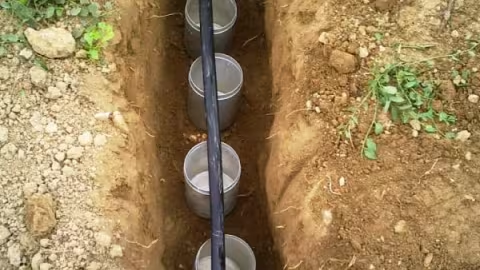
Subsurface drip irrigation (SDI) is currently one of the most efficient and sustainable irrigation techniques. It offers all the advantages of drip irrigation while avoiding any clutter on the ground, thus facilitating mechanization.
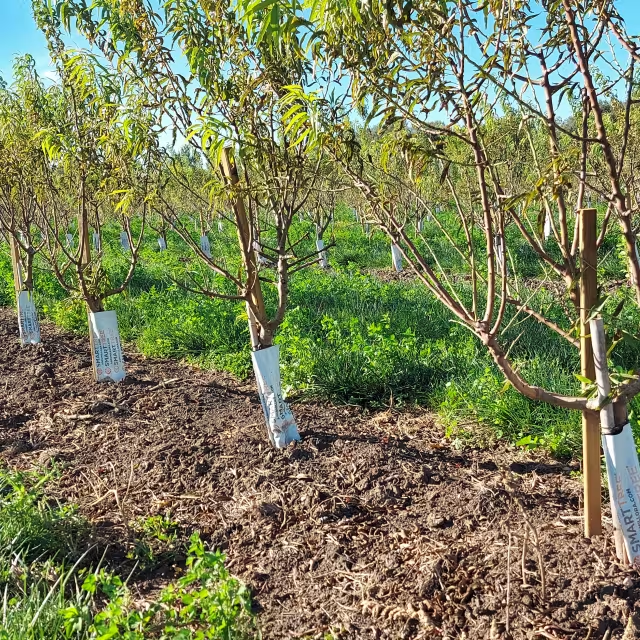
Drip irrigation allows water and fertilizer to be directed directly to the root zone, optimizing agronomic efficiency while reducing water loss and evaporation. This approach is commonly used in permanent crops such as arboriculture and field crops (very good results in corn), but also in landscaping (lawns, flower beds, green roofs). However, this irrigation method requires a great deal of rigor in the design, installation, and operation of the system. With over twenty years of experience in this practice, Netafim can provide you with solid expertise to maximize your chances of success.
1. Best practices for installing and using buried drip irrigation
However, these significant advantages do not make it a technique that is suitable for all situations. Buried drip irrigation requires special attention to certain points that are important to know before starting your project. Each step must be rigorously controlled.
1.1 - The importance of a rigorous hydraulic study
The design of an underground drip irrigation system (SDI) is based on specific hydraulic principles that differ from those used in surface irrigation systems.
A thorough hydraulic study is therefore essential to ensure the long-term reliability, durability, and efficiency of the system. This study must take several key factors into account:
- Choosing the right dripper: Using a high-performance, durable anti-siphon dripper is essential to prevent soil particles from being sucked in when irrigation is stopped. There are innovative drippers made from copper oxide mixed directly into the material used to make the dripper's anti-root compartment, providing better protection against root intrusion and biological growth, without chemical discharge and therefore without impacting the natural environment.
- Sizing of counter-combs: drain collectors must be provided systematically to ensure effective pressure drainage of the network and to facilitate annual treatments. Each counter-comb must be equipped with a manual (or automated, depending on the budget) drain valve. On average, there are 2 to 3 drains per hectare, depending on the plot layout and crop..
.
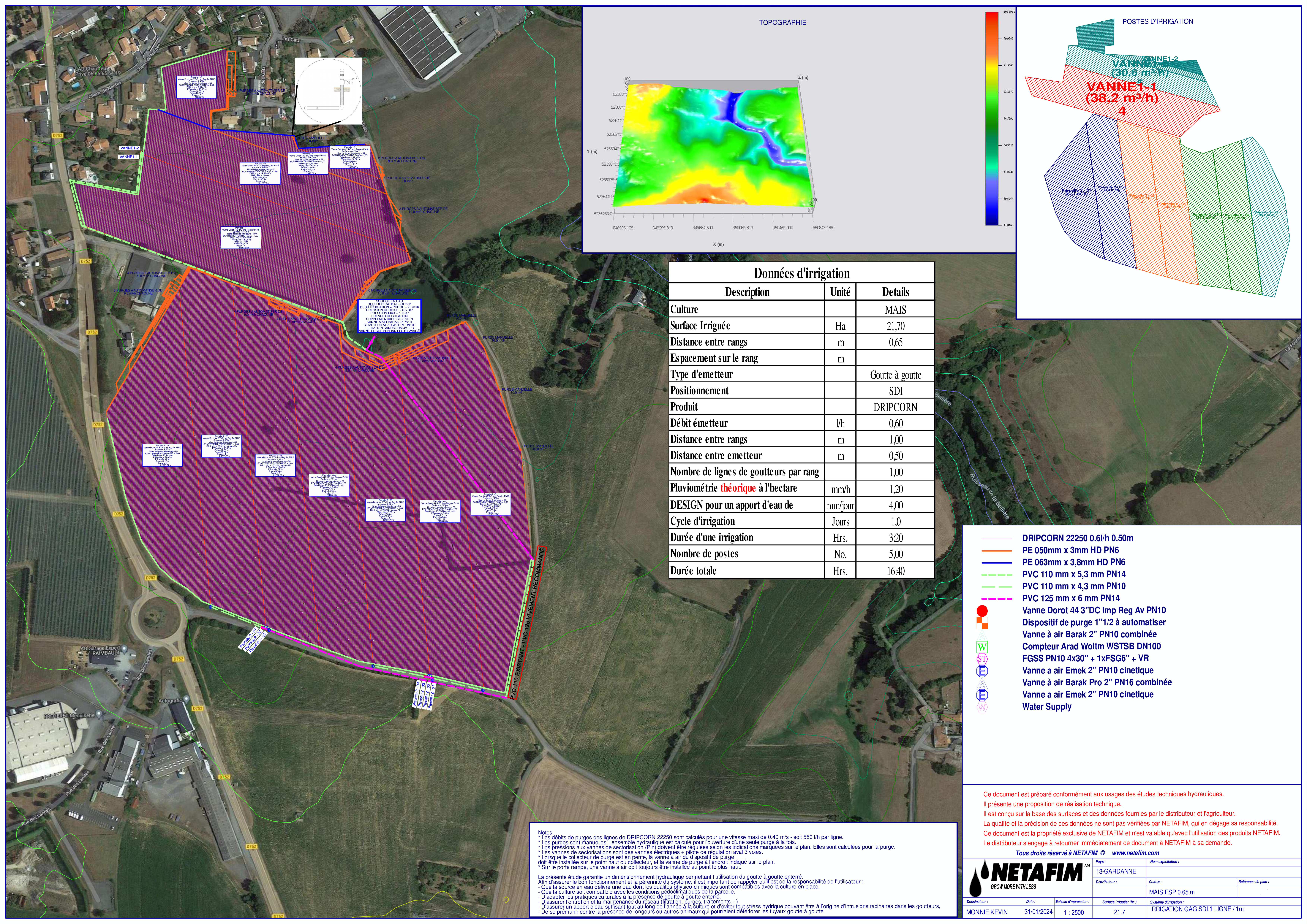
Credit photo : Netafim - "The importance of a rigourous hydraulic study"
- Kinetic air valves: installing these at strategic points—as determined by the hydraulic study—helps to secure the network's operation and prevent siphoning. It also improves the network's filling times.
- Purge speeds: undoubtedly one of the most important points, the network must be sized to allow a minimum water speed of 0.4 m/s in the drip lines during purge cycles, at all points in the system, to remove any particles and deposits.
- The filtration system: the increasing scarcity of water resources is leading to the use of water of mediocre quality. A reinforced and secure filtration system (sand filters, discs, or a combination) is essential. It protects the drippers and maintains uniform irrigation throughout the system's lifetime. It is therefore essential to select a filtration system based on the characteristics of the water resource. The quality of the water must be analyzed before the project (pH, iron, manganese, suspended solids, bacteria, etc.) in order to choose the appropriate system. Well water rich in iron or manganese should be avoided, as it can cause irreversible clogging of the drippers. Surface water, which is often loaded with organic matter, requires secondary filtration at the head of the plot or even preventive chemical maintenance (hydrogen peroxide).
- Finally, the water cycle (complete irrigation cycle) must be defined in such a way as to cover the crop's water requirements while respecting the hydraulic capacities of the network.
1.2. Irrigation control: precise and continuous management
Controlling irrigation in an underground drip irrigation system (SDI) requires special attention.
Unlike a surface drip system, where the effects of water imbalance can be quickly corrected, poor management in an underground network can have more serious and lasting consequences. A prolonged irrigation deficit promotes root intrusion into the drippers, an often irreversible phenomenon that can render all or part of the installation permanently unusable.
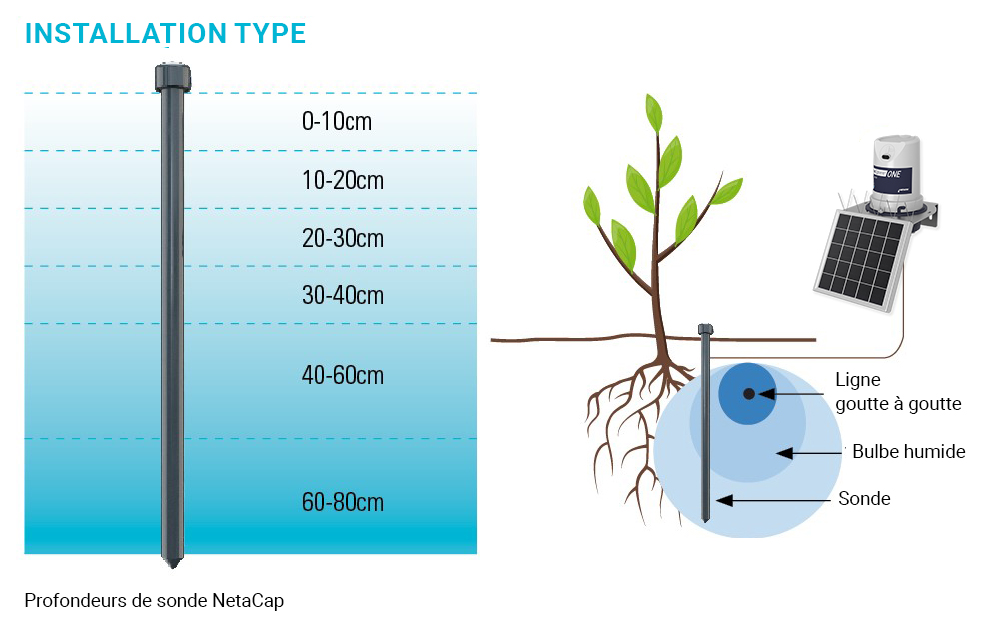
- To avoid these problems, management must be based on accurate and continuous measurements of soil moisture levels. The use of capacitive probes, tensiometers, or connected sensors allows real-time monitoring of moisture in the root zone and adjustment of water supply accordingly.
- A basic program must be defined at the start of the season to ensure a constant minimum water supply. This basic irrigation will be adjusted regularly according to the crop's stage of development, weather conditions, and field observations.
One essential rule: never completely shut down the system, except in the event of significant and effective rainfall. Permanent moisture around the drippers is the best barrier against root intrusion.
- It is important to note that SDI is not suitable for contexts where water resources are insufficient to cover the crop's entire annual water requirements. SDI requires a reliable and regular water supply from the beginning to the end of the growing season: this is essential to ensure the proper functioning and longevity of the network and the agronomic success of the crop.
1.3. Soil: a key parameter for the success of the SDI system
Before any installation, a thorough soil study must be carried out to verify the compatibility of the site with the planned crop and to adapt the network design accordingly.
• Soil depth: The usable soil depth must be measured to ensure that it allows both good root development and the installation of underground lines.
Soil profiles taken at several points on the plot can be used to confirm this depth and determine the optimal burial depth for the drippers.
• Texture and structure: Soil texture influences the irrigation strategy, the choice of drippers, and the spacing of the lines.
• Stone content: The rate and type of stone content must be carefully assessed.
Soil that is too stony or contains sharp-edged elements can damage the lines during installation or in the long term. A high stoniness rate can compromise the quality of mechanical installation and limit the soil's water retention capacity.
• Salinity: Saline soils or soils with high conductivity require special attention.
A chemical analysis of the soil will help identify salinity issues and lead to necessary adjustments in the irrigation and fertigation strategy.
• Vehicle traffic: In arboriculture, the positioning of drip lines must be planned taking into account areas where agricultural vehicles will be traveling. Repeated traffic directly over the lines can create ruts or compaction, especially in wet conditions, which may damage the network. It is therefore recommended to align the drip lines between the tracks or to provide dedicated traffic areas.
• Soil cultivation and mechanical operations: On a plot equipped with Drip Irrigation, deep soil cultivation is prohibited. Only superficial maintenance is permitted, and any mechanical operations must be planned taking into account the position of the buried lines. In field crops, only superficial tillage techniques are permitted (no-till) and deep tillage is not an option under any circumstances.
• Soil fauna and pests: The presence of rodents, ants, or mole crickets can pose a risk to cables, particularly in light soil or near hedges.
Regular monitoring and, if necessary, targeted protective measures must be included in the maintenance plan. Certain crops or cover crops can be very problematic as they encourage large concentrations of rodent populations.
.
1.4. Culture: a determining factor in the relevance of buried drip irrigation
Not all species are compatible with this technology, and it is essential to carefully assess root morphology, water requirements, and growing conditions before undertaking any project.
• Crop compatibility and root system: Subsurface drip irrigation (SDI) can be used on a wide range of crops: stone fruits, nuts (such as hazelnuts), field crops (corn), peonies, asparagus, berries, vines, as well as green spaces, etc.
However, irrigation management varies significantly depending on the crop.
In arboriculture, periods of water stress can very quickly damage the system. It is therefore essential to ensure a continuous water supply, from bud break to the end of the growing cycle.
In the case of vines, for example, SDI is not recommended for appellations that impose water restrictions. Surface drip irrigation is more suitable in this case.
For annual crops such as corn, irrigation management can be more flexible. A slight controlled water stress can be tolerated because these plants are harvested at the end of the season and their root system does not persist from one year to the next. This significantly reduces the risk of root intrusion into the drippers, making buried drip irrigation compatible even with more limited water resources, provided that the irrigation strategy is adapted to the crop cycle.
Some crops, due to their highly invasive or spreading root systems (such as bamboo), are not suitable for buried drip irrigation. It is therefore essential to study the type of root system in order to determine the depth of burial and the position of the lines in relation to the plant.
Pivot or deep root systems are well suited to SDI, while shallow roots require special attention to the installation height.
• Crops requiring irrigation shutdown: Crops that require complete irrigation shutdown for a given period (especially certain perennial crops) are not compatible with DRI. Prolonged moisture deficiency around drippers can lead to root intrusion, a phenomenon that is often irreversible.
• Water requirements and production objectives: Water requirements must be assessed according to the crop, yield potential, and geographical location.
Management tools (probes, climate models, water balances) can be used to adjust irrigation scheduling according to agronomic objectives and the possible presence of plant cover or inter-rows.
• Positioning of lines and burial depth: The positioning of drip lines must be determined before the hydraulic study, based on planting density and distance between rows.
The burial depth must allow for uniform moistening of the root zone. It generally varies between 10 and 16 inches depending on soil type and crop.
• Young plantations: In the case of young plantations, buried drip irrigation may be insufficient to meet the water needs of plants that are still poorly rooted.
A temporary surface irrigation solution (micro-sprinklers, overhead drip irrigation, or manual watering) is often necessary during the first few years, until the root system reaches the area moistened by the DSI.
2. Monitoring and maintenance: the key to system sustainability
An underground drip irrigation system (SDI), although fully automatable, requires rigorous monitoring and preventive maintenance throughout the year. This monitoring aims to guarantee the hydraulic performance of the network and the longevity of the equipment.
• Monitoring water requirements: The user must ensure precise irrigation management by monitoring the crop's water requirements as they change throughout the seasons.
Water volumes must be adjusted according to the weather, the stage of development, and the soil's available water supply.
Connected sensors (pressure, flow, soil moisture) facilitate this monitoring and allow for immediate response.
• Regular purging and flushing: Periodic purging is essential to remove sediment and particles that have accumulated in the lines.
The frequency depends on water quality, but must be sufficient to maintain a minimum speed of 0.4 m/s during flushing.
Each sub-sector must be equipped with manual or automatic purge valves.
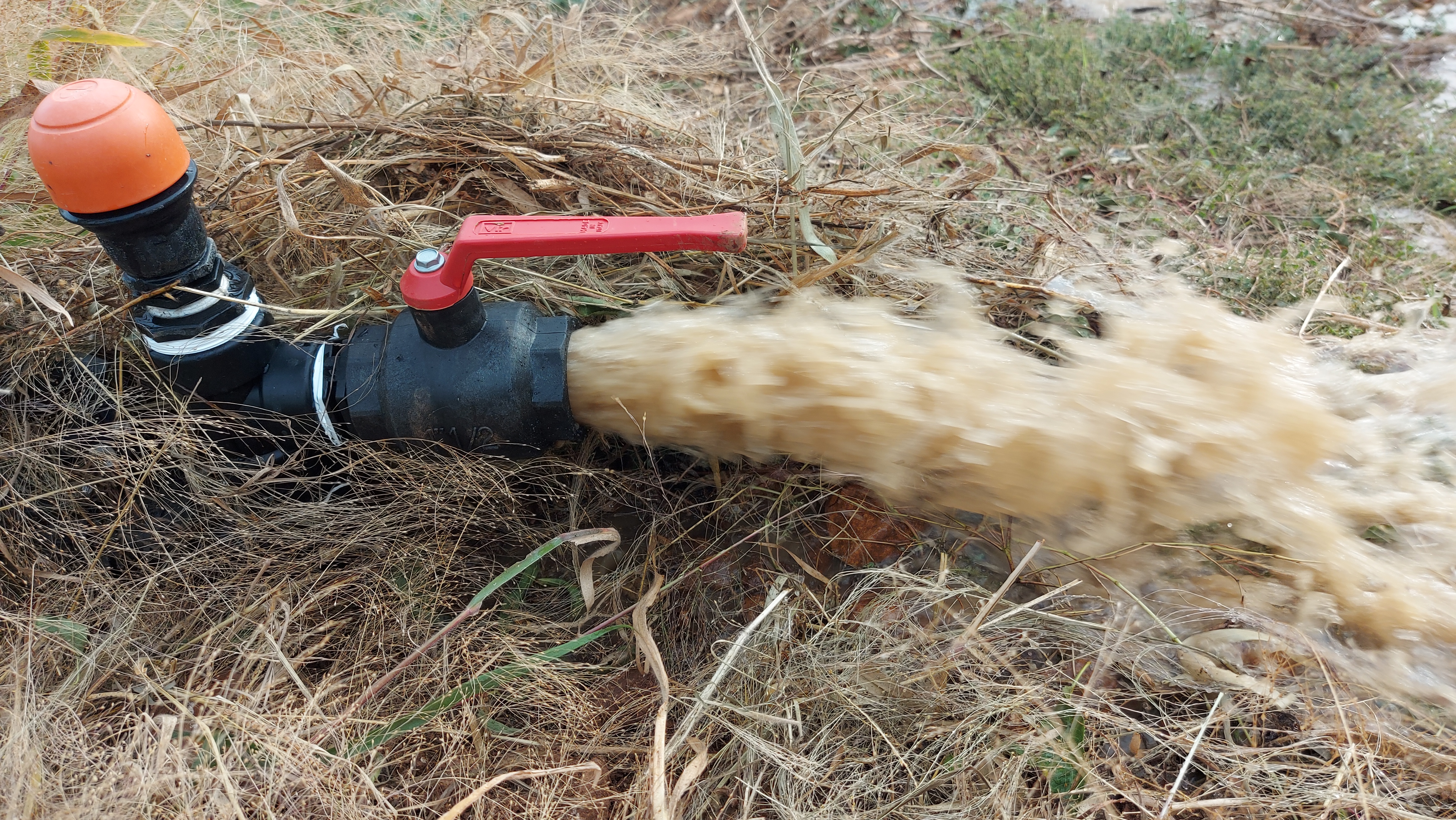
Crédit Photo : Netafim : "Periodic purging is essential to remove sediment and particles that have accumulated in the lines"
• Filter maintenance: Primary and secondary filters must be checked and cleaned regularly.
Poorly maintained filters are the main cause of clogging in SDI networks.
Installing differential pressure sensors can help anticipate filter clogging.
• Monitoring volumes and pressures: A water meter can be used to monitor consumption and detect any leaks or drops in flow. Pressures should also be checked regularly at various points in the network to identify any hydraulic drift and to ensure that operating pressures correspond to those specified in the hydraulic study. Keeping a record of readings is essential for monitoring changes in the condition of the network.
• Treatments: Acid treatment (often hydrochloric or nitric acid) is recommended at least once a year, or more depending on water quality, to dissolve carbon deposits.
Hydrogen peroxide treatment can also be used to remove biofilms and organic deposits.
• Annual drip check: It is advisable to regularly take samples from drippers at several points in the network to assess their internal condition, actual flow rate, and cleanliness.
These checks allow any problems to be corrected quickly before they affect the overall performance of the system.
Conclusion
Subsurface drip irrigation (SDI) is much more than just an irrigation system: it is a strategic tool and, in some cases, an indispensable solution to the challenges of modern agriculture and its cultivation practices. Suitable for a wide variety of crops and applications—especially when ground equipment is not an option—SDI combines technological innovation with agronomic and environmental performance.
Its successful use depends on understanding and anticipating sensitive issues from the project phase onwards.
It is a demanding technology, but when mastered by knowledgeable users, it offers sustainable and measurable results that fully meet the challenges of more efficient and resilient agriculture.
INNOVATION AS XR NETAFIM™ for buried drip applications: Its secret is an innovative copper oxide mixed directly into the material used to make the anti-root compartment of UniRam / UniWine / UniTechline / Bioline XR models. The XR concept was developed exclusively by Netafim to offer the best protection against root intrusion and biological growth in buried drip applications and in every market segment (irrigation in agriculture, parks, and gardens, recycled water), without chemical discharge and therefore without impact on the natural environment. For more efficient buried irrigation, with a more durable product, in a preserved environment.


UniRam AS XR UniWine AS XR Bioline AS XR UniTechline AS XR