Because funding flows without meters, basin-level limits, or enforcement. Efficiency gains at the farm are erased by crop expansion at the basin, following the mechanisms that offer three specific CAP reforms to fix them.
This article was submitted for publication as part of the call for papers for young specialists and represents an independent opinion on the market.
Abstract
The EU’s substantial investment in irrigation infrastructure under the Common Agricultural Policy (CAP) has not translated into commensurate gains in water productivity at the farm level. Despite €387 billion committed under CAP 2021–2027 and decades of rural development funding for irrigation modernization, only 6% of EU farmland is irrigated, yet this land accounts for 24% of all water abstraction. This paper argues that two specific, under-examined mechanisms explain this efficiency paradox: (1) the governance gap between CAP conditionality rules and actual farm-level irrigation behaviors, and (2) the rebound effect whereby technology upgrades, particularly the shift from surface to drip irrigation in southern Europe, increase total water consumption rather than reduce it by enabling crop area expansion. Drawing on data from Spain, Italy, and the Guadalquivir Basin, and on findings from the European Court of Auditors’ Special Report 20/2021, this paper advances targeted policy recommendations for the CAP post-2027 period.
Introduction
Irrigated agriculture is simultaneously Europe’s most productive and most water-intensive farming system. While irrigated land represents only 6% of EU farmland, it is responsible for 24% of all water abstraction across the bloc, a ratio that reveals a fundamental tension between agricultural productivity and resource sustainability (European Court of Auditors, 2021). In Southern Europe, the situation is more extreme: the MED9 countries¹ account for 60% of the EU-27’s total agricultural water abstraction, with irrigation consuming up to 60% of total water use during spring months (EEA, 2025).
The European Commission has not been passive. The Water Framework Directive (WFD), in force since 2000, required all EU water bodies to achieve ‘good status’ by 2015, a target now extended to 2027 for many basins with ‘justified exemptions.’ CAP 2023–2027 introduced reinforced conditions, including GAEC 4 (buffer strips along watercourses) and GAEC 5 (tillage management to reduce soil and water losses), and made conditional on consistency with WFD objectives. The European Court of Auditors’ landmark Special Report 20/2021 found that Member States consistently fail to check compliance with the environmental conditions linked to rural development irrigation funding, and that eight out of eleven audited Member States use EU funds to support water-intensive crops in areas already classified as having high or very high-water stress (ECA, 2021).
This paper focuses on two specific, underappreciated mechanisms that explain why irrigation investment is not producing expected efficiency gains. The first is a governance gap: conditionality rules exist on paper, but are not enforced at the plot level where water is actually applied. The second is a rebound effect: technology modernization, particularly the shift from surface to drip irrigation, does not necessarily reduce total water consumption because it enables farmers to expand irrigated area or shift to higher-value, more water-demanding crops. Together, these mechanisms reveal that the EU’s irrigation challenge is as much institutional as it is technical.
The European Irrigation Landscape: Scale, Stress, and Structural Disparity
Water scarcity affected 28% of the EU land area and 32% of the EU population in 2023, with conditions prevalent year-round in Southern Europe, where around 30% of the population live in areas of permanent water stress and up to 70% in areas of seasonal summer stress (EEA, 2025). In the Guadalquivir Basin in Southern Spain, one of Europe’s most intensively irrigated river systems, the relative irrigation supply (a measure of the ratio between available and demanded water) fell from 0.70 to 0.56 between 2000 and 2021, forcing farmers to adopt deficit irrigation as a survival strategy rather than an efficiency choice (Tocados-Franco, 2023).
The EU has spent billions funding irrigation infrastructure upgrades, principally the conversion from surface irrigation (furrow and basin systems) to pressurized drip and sprinkler systems. In Spain alone, data from the National Institute of Statistics (INE, 2021) show that approximately
3.8 million hectares, over 23% of agricultural land, are now irrigated, with drip irrigation covering 53% of that area by 2021. In Italy, 20% of irrigated land had shifted to drip systems by 2022 (Irrigation Europe, 2022). The European drip irrigation market was valued at USD 2.5 billion in 2023 and is projected to grow to USD 4.8 billion by 2030 at a compound annual growth rate of 7.1% (Vynz Research, 2023).
Table 1. Key irrigation and water scarcity indicators for the EU-27, Southern Europe, and Spain. Sources: ECA (2021); EEA (2025); INE (2021); Tocados-Franco (2023)
|
Indicator
|
EU-27
|
Southern EU
(MED9)
|
Spain
|
|
Share of farmland
irrigated
|
~6% (2016)
|
Highest share
|
~23% (3.8M ha,
2021)
|
|
Share of total water
abstraction
|
24%
|
60% of the EU-27
total
|
~70% of Spain's total
|
|
Drip irrigation
adoption
|
Growing
|
Dominant technology
|
53% of the irrigated area
(2021)
|
|
Water scarcity
exposure (2023)
|
28% of the EU land
Area
|
Permanent stress
(30% pop.)
|
70%+ seasonal stress
|
|
Relative irrigation supply
(Guadalquivir)
|
—
|
0.56 in 2021
|
Fell from 0.70 (2000)
|
These figures suggest a sector in rapid technological transition. The question this paper addresses is: Does this transition produce water savings? Or does it redistribute, and potentially expand water demand?
The Governance Gap: When Conditionality Does Not Reach the Plot
The foundational finding of ECA Special Report 20/2021 is not that the EU lacks instruments to promote sustainable irrigation; rather, those instruments consistently fail to reach the farm level where water is actually applied. The auditors examined eleven Member States and, in most cases, found no evidence of checks on compliance with the environmental requirements governing Common Market Organization (CMO) funding for irrigation infrastructure. None of the Member States reviewed have introduced restrictions on funding in water-stressed areas, or requirements that farms receiving investment support already possess efficient irrigation systems (ECA, 2021).
This governance gap operates at two levels. At the scheme level, Member States approve irrigation modernization projects funded by the European Agricultural Fund for Rural Development (EAFRD) and the CMO without requiring verification of WFD river basin management plans. The result, documented by the ECA, is that the EU funds support water-intensive crops, such as cotton, rice, and maize, in areas already classified under high water stress by the World Resources Institute Aqueduct index. At the plot level, where water meters are legally required, many farms lack functional metering, making it impossible for authorities to verify whether abstraction limits are respected or whether funded efficiency improvements have produced real savings.
Italy’s IRRINET-IRRIFRAME project in Emilia-Romagna provides a rare example of effective plot-level governance. Developed with CAP rural development support, the system provides real-time irrigation scheduling to more than 40,000 farms, representing nearly 40% of the
region’s irrigated area. Between 2007 and 2013, the system delivered water savings exceeding 50 million cubic meters (European Commission, 2021). The lesson from Emilia-Romagna is not simply that technology works, but that technology combined with compulsory real-time advisory uptake and verified scheduling compliance can produce measurable results. This is precisely what generic infrastructure funding, without governance requirements, fails to deliver.
The WFD itself has not resolved the governance gap. The Commission acknowledged in its own WFD assessment that implementation has been ‘significantly delayed, largely due to insufficient funding, slow implementation and insufficient integration of environmental objectives’ (European Commission, 2010). By 2015, the quantitative status of around 9% of EU groundwater bodies was still rated ‘poor’ (ECA, 2021). The European Environmental Bureau has called explicitly for the WFD to be incorporated into CAP cross-compliance, meaning that direct payments would be linked to WFD compliance, rather than remaining a parallel legal obligation with limited agricultural enforcement (EEB, 2017).
The Rebound Effect: How Technology Upgrades Can Increase Water Consumption
The irrigation rebound effect, sometimes called the Jevons paradox, applied to water, describes a counterintuitive outcome: that improving irrigation efficiency at the plot level does not necessarily reduce total water consumption at the basin level, because farmers use the water ‘saved’ to expand irrigated area, adopt more water-demanding crops, or irrigate more frequently (Grafton et al., 2018).
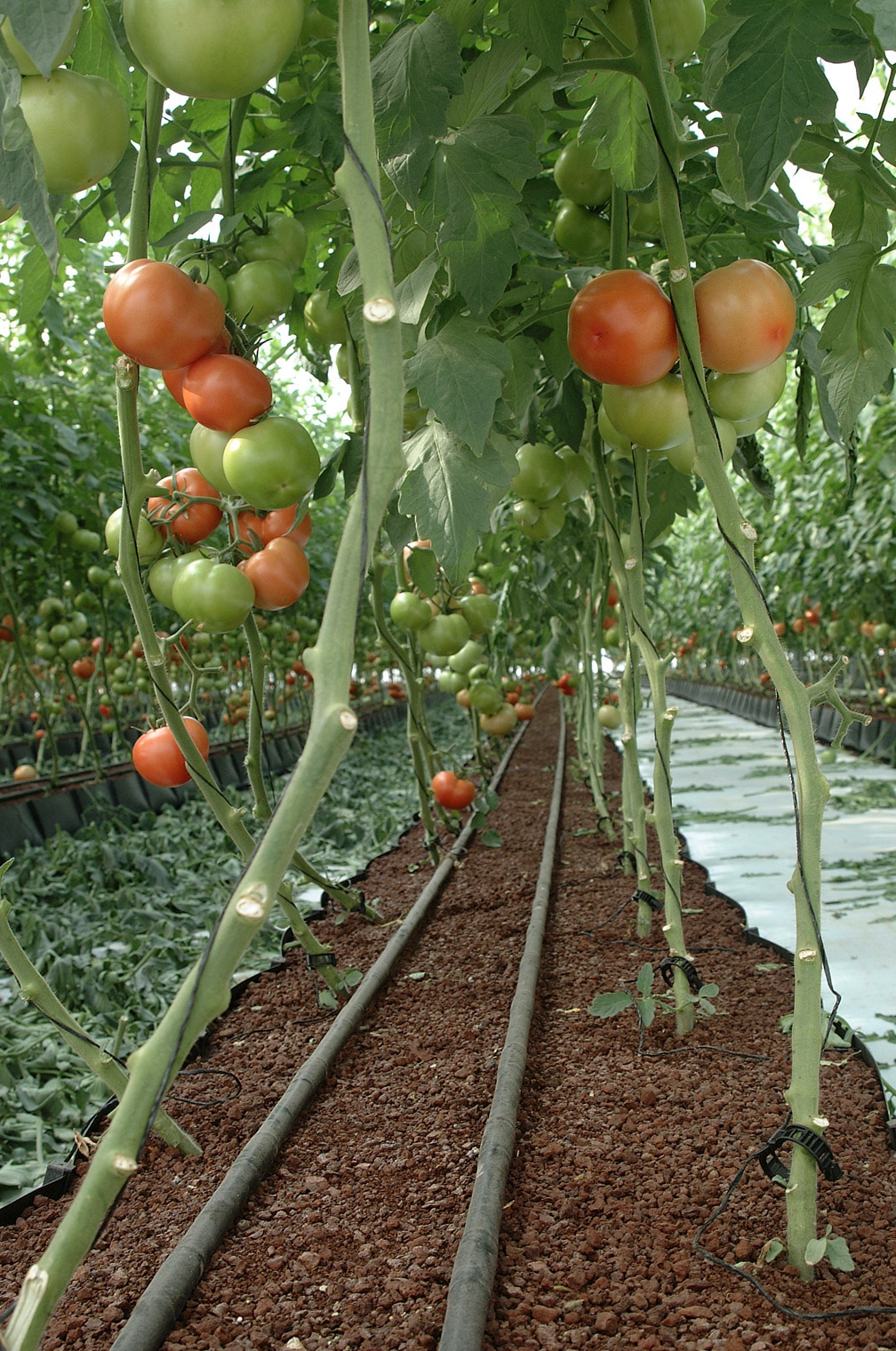
Photo credit : Rivulis "Drip irrigation technology is spreading rapidly in southern Europe, but water stress is worsening"
Spain’s experience with irrigation modernization provides the EU’s most documented case study. As drip irrigation coverage expanded from a minority to a majority of Spanish irrigated land between 2000 and 2021, voices from within the Spanish research community increasingly warned of systemic water accounting failures. Sahuquillo (1999) specifically warned that drip irrigation reduces the return flows, the water that re-enters aquifers from surface irrigation, on which downstream users depend. As drip systems produce more consumptive use (water taken up by the plant rather than returning to the groundwater), basin-level depletion can worsen even as plot-level efficiency improves (SciDirect, 2024).
The evidence from the Guadalquivir Basin is instructive. Despite large-scale irrigation modernization, the basin’s relative irrigation supply fell by nearly 20 percentage points between 2000 and 2021 (from 0.70 to 0.56), and the expansion of irrigated perennial crops, olives, citrus, and almonds, enabled by drip systems, has increased total water demand rather than reduced it. The Doñana National Park wetland, a UNESCO World Heritage Site, has experienced documented drying attributable in part to agricultural over-abstraction enabled by irrigation expansion in the surrounding zone (Climate Scorecard, 2023).
The rebound effect is not inevitable, but it is the default outcome when irrigation technology investment is not paired with binding water abstraction limits, monitored through metering, and enforced through governance structures that hold basin-level consumption constant. This is precisely what the ECA found missing from the EU Member State implementation of CAP irrigation funding.
Policy Implications for CAP Post-2027
The foregoing analysis suggests that the EU’s current approach to irrigation modernization funding technology upgrades without enforcing basin-level consumption limits or plot-level compliance risks produces the opposite of its intended effect in water-stressed regions. Three specific reforms are proposed for the CAP post-2027 negotiation:
The ECA’s Recommendation 3 from its 2021 special report explicitly calls on the Commission to ensure that irrigation investments funded under the CAP contribute to WFD objectives, and that Member States evaluate the impact of rural development funding on water use. A minimum prerequisite for any such evaluation is reliable metering. The post-2027 CAP should require that all farms receiving investment support for irrigation infrastructure have functioning water meters installed before any payment is made, and that annual abstraction data are reported to national authorities and verified against WFD river basin management plan targets.
The requirement would create the data infrastructure that currently makes Governance of Irrigation impossible.
- Basin-Level Water Budgets as the Binding Conditionality Unit
Current CAP conditionality operates at the farm level (GAEC requirements applied to individual holdings) but does not incorporate basin-level water availability as a constraint. In water-stressed basins, the appropriate unit is the basin, not the farm. Member States should be required, as part of their CAP Strategic Plans, to designate river basins where agricultural water abstraction already exceeds sustainable yield, and to introduce automatic conditional reductions for all farms in those basins that cannot demonstrate compliance with basin-specific abstraction limits. This would directly address the ECA’s finding that eight of eleven audited Member States fund water-intensive crops in high-stress basins without restriction.
- Eco-Scheme Payments Conditional on Verified Consumptive Use Reduction
The CAP 2023–2027 introduced eco-schemes as a new instrument allowing farmers to receive payments for voluntary environmental practices. Currently, eco-schemes supporting sustainable water management, such as reduced tillage, enhanced crop diversification, and soil moisture management, are assessed against practice adoption, not against measured outcomes. Post-2027 eco-schemes should shift to an outcome-based model in which payments for water-related practices are linked to verified reductions in consumptive water use, measured at the farm level through metering and at the basin level through WFD monitoring systems. Italy’s IRRINET-IRRIFRAME model, which links real-time irrigation scheduling to verified water savings, demonstrates that this approach is technically feasible at scale.
Conclusion
The EU’s irrigation challenge is not a technology deficit; drip irrigation is spreading rapidly across Southern Europe, supported by billions in CAP investment. It is a governance deficit. The Governance gap between CAP conditionality rules and actual plot-level compliance means that funding for irrigation modernization routinely flows to water-stressed basins without enforceable abstraction limits, without mandatory metering, and without post-investment evaluation. The rebound effect means that technology upgrades, unconstrained by basin-level governance, can increase rather than reduce total water consumption.
With the EU facing a trajectory of worsening drought frequency and severity, 47% of European territory registered drought warning conditions in 2022 (Joint Research Centre, 2024). The cost of continuing this approach is measurable in wetland loss, aquifer depletion, and rural communities denied water.
The post-2027 CAP negotiation offers a critical opportunity. The technical knowledge exists. The policy instruments exist. What remains is the institutional will to enforce them at the level where irrigation actually happens: the individual farm plot.
Notes
1 The MED9 refers to the nine EU Member States most affected by drought and water scarcity: France, Greece, Italy, Croatia, Portugal, Malta, Cyprus, Spain, and Slovenia.
By Maureen Membis Master's in Agricultural Environmental Management Engineering, University of Debrecen, Hungary.
-
OECD (2020). Sustainable Agriculture and Water Management in Europe. https://www.oecd.org/agriculture/topics/water-and-agriculture/
-
Pe’er, G. et al. (2022). The EU’s Common Agricultural Policy post-2027: A critical analysis from a nature conservation and climate perspective. Frontiers in Sustainable Food Systems.
-
Perry, C., Steduto, P., Allen, R., & Burt, C. (2009). Increasing productivity in irrigated agriculture: Agronomic constraints and hydrological realities. Agricultural Water Management, 96(11), 1517–1524. https://doi.org/10.1016/j.agwat.2009.05.005
-
Robert Schuman Foundation (2022). The Common Agricultural Policy 2023–2027: Change and Continuity. European Issue No. 607. https://www.robert-schuman.eu/en/european-issues/0607-the-common-agricultural-policy-2023-2027-change-and-continuity
-
ScienceDirect (2024). Towards a New Efficiency Paradigm for Drip Irrigation? Changes in Water Allocation and Management in Irrigation and Wetland Systems. https://doi.org/10.1016/j.agsy.2024.103946
-
Stupazzini, M. (2024). EU and Drought: How They Get On. Center for European Studies, University of Florida. https://ces.ufl.edu/eu-need-to-know/2024/eu-and-drought-how-they-get-on/
-
Tocados-Franco, J. M. (2023). Guadalquivir River Basin: Drought Vulnerability and Irrigation Supply. Cited in: Center for European Studies (2024).
-
Vynz Research (2023). Europe Drip Irrigation Market Size, Share, Growth, and Demand by 2030. https://www.vynzresearch.com/food-beverages/europe-drip-irrigation-market